


If you follow technology, you have probably encountered the Internet of Things (IoT). In industry, it supports machine monitoring and automation. At home, connected devices allow remote control of lighting, heating and alarms. What does this mean for manufacturing and everyday operations?
What is IoT, and why does it matter?
The Internet of Things (IoT) connects physical devices that collect and exchange data with other devices or central systems. Sensors, cameras, thermostats and industrial machinery can communicate and coordinate selected activities. Collecting, processing and analysing their data supports better-informed decisions and new services.
In industry, IoT can support equipment monitoring, process efficiency and cost management. At home, it can improve control of lighting, heating and security systems. Healthcare applications include patient monitoring and medical-equipment management, subject to the relevant safety and data requirements. Other uses include smart cities, energy management and logistics.
IoT is associated with Industry 4.0 and industrial digitalisation. Suitable networks, including 5G where appropriate, and cloud or local computing support connected buildings, vehicles and energy systems. The right architecture depends on the application's requirements.
How do IoT solutions work?
An IoT system combines several elements:
- End devices: physical objects with sensors or communication modules that collect information or perform tasks. Examples include smart energy meters, cameras and industrial machines.
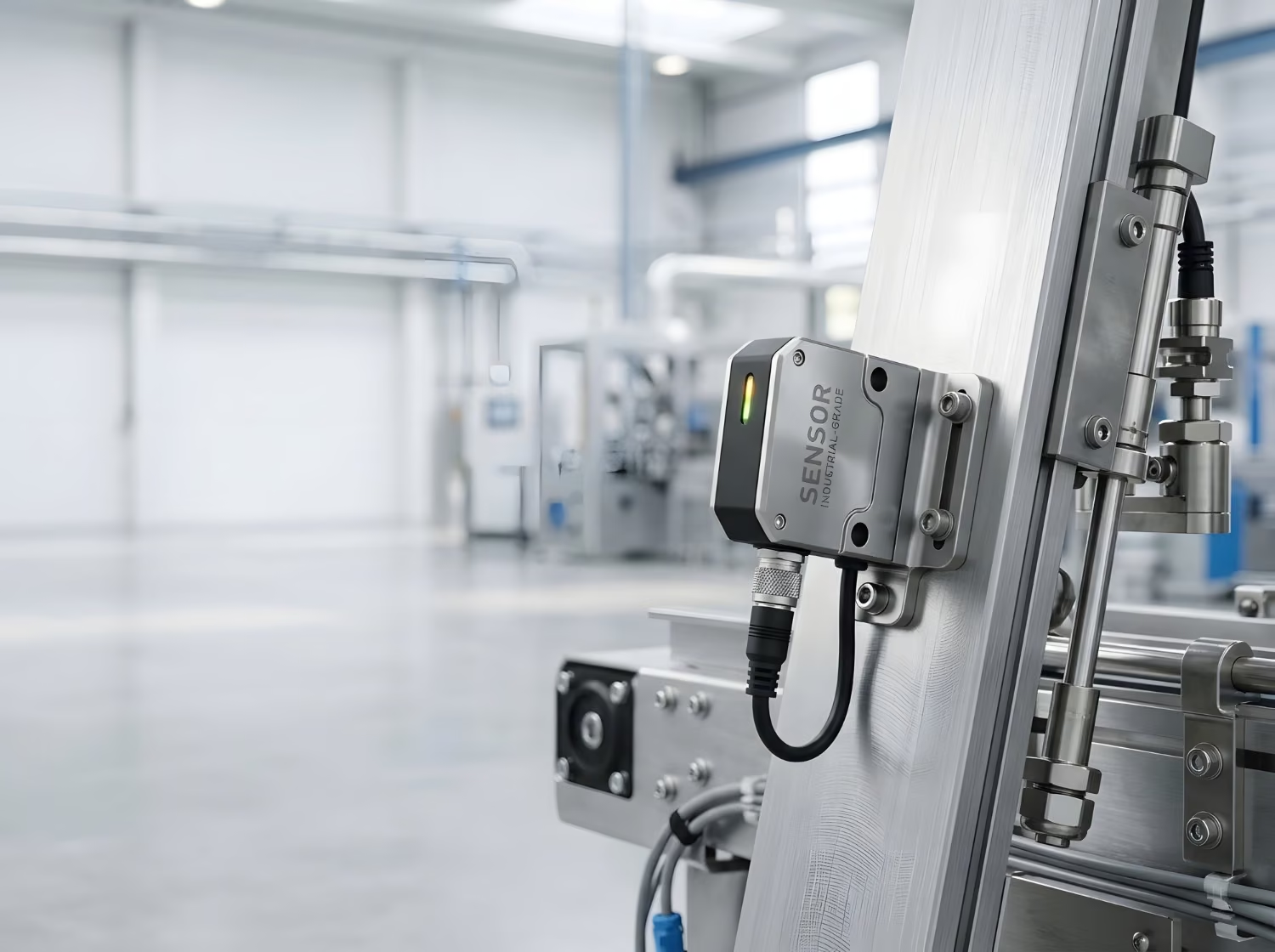
- Sensors and actuators: sensors measure variables such as temperature, humidity, movement or light. Actuators carry out actions, such as switching lighting or operating equipment.
- Communication networks: technologies such as Wi-Fi, Bluetooth, Zigbee and cellular networks carry data to the relevant systems. The choice affects range, power use, capacity and reliability.
- Data platforms and computing: software and computing infrastructure store and analyse information and present it to users through reports, alerts or visualisations.
IoT applications across industries
Manufacturing
Connected factories use sensor networks to monitor equipment condition and production parameters. This can help teams respond to faults and optimise processes. Warehouses and supply chains also use connected identification and monitoring to track goods, improve visibility and reduce losses.
Automotive
Connected vehicle systems can support technical-condition monitoring and maintenance planning. Navigation services use traffic data to help drivers choose routes. Connectivity can complement driver-assistance and autonomous-driving systems, but does not replace their onboard sensing, control or safety functions.
Energy
IoT supports smart grids and the monitoring of energy supply and demand. Smart meters provide consumption data that helps users assess costs. Connected monitoring also supports the integration and operation of renewable sources such as solar panels and wind turbines.
Home
Connected thermostats, lighting and locks provide remote control and automation. Cameras and motion sensors support monitoring, while heating controls can respond to schedules and weather conditions. Benefits depend on secure configuration, reliable operation and an appropriate system design.
The future of the Industrial Internet of Things
The Industrial Internet of Things (IIoT) applies connected sensing and data systems to industrial processes. It supports Industry 4.0 through equipment monitoring, analytics and, where suitable, AI. Condition data can help assess performance, identify potential failures and reduce avoidable downtime.
IIoT can also support more flexible production and resource planning. Analytics may reveal opportunities to reduce material and energy use. Combining robotics with connected systems can automate selected operations, while people remain responsible for engineering, supervision, maintenance and safety.
IoT solutions
IoT and IIoT are changing how businesses and homes collect information and coordinate activities. They create opportunities for automation, tailored services and resource management. Technologies such as 5G, cloud computing and AI provide additional tools when they suit a defined use case.
For companies such as Techbit, which provide electronics manufacturing, connected products represent an area of customer demand. Manufacturing the electronics for an IoT device requires clear documentation, suitable components and an agreed assembly and test scope. The complete software, network and platform solution is a separate project consideration.