


Businesses and consumers are increasingly aware of the environmental effects of electronics. Manufacturers seeking to reduce those effects need to consider materials, production processes and the entire product life cycle. Sustainability is therefore part of many companies' production strategies.
What is sustainable manufacturing?
Sustainable manufacturing aims to reduce environmental impacts while maintaining economic viability and social responsibility. It considers the balance between environmental, economic and social outcomes.
Key aspects of sustainable manufacturing
- Efficient resource use: make better use of materials and reduce waste. Depending on the product, this may include suitable renewable or recycled materials, reuse and repair.
- Reduced environmental impacts: assess and reduce pollutant and greenhouse-gas emissions. Energy-efficient technologies and appropriate renewable-energy sources may contribute.
- Social responsibility: consider working conditions, human rights and the effects on local communities.
- Ecodesign: assess environmental impacts throughout the life cycle, from raw-material extraction to manufacture, use and end-of-life treatment.
- Continual improvement: monitor performance, analyse environmental impacts and use the results to identify improvements.
Potential benefits
- Lower consumption of natural resources and energy
- Reduced costs through more efficient processes
- Better management of environmental and compliance risks
- Stronger stakeholder confidence
- Opportunities for improved products and competitiveness
Designing with the environment in mind
Environmental considerations begin during product design. Material selection, repairability and realistic end-of-life options matter. Designers can also reduce avoidable production waste by reviewing the manufacturing process and construction. Ecodesign needs to consider the complete product rather than one material or isolated stage.
Environmental improvements in production
Manufacturing practices can reduce emissions and resource consumption. Renewable electricity may reduce the emissions associated with energy use, depending on its source. Monitoring and optimising electricity and water consumption are also useful parts of an environmental programme.
Energy efficiency
Improving buildings, heating, cooling and production equipment can reduce energy demand. Renewable electricity changes the energy supply, while efficiency measures reduce consumption. Energy-efficient products may also lower use-phase impacts and operating costs.
The circular economy
Circular approaches seek to retain the value of materials and products through longer use, repair, refurbishment and appropriate recycling. Businesses may establish take-back arrangements or design products for maintenance and upgrades. The appropriate approach depends on the product and the available treatment infrastructure.
Cooperation and partnerships
Progress often requires cooperation between manufacturers, research organisations, public bodies and other stakeholders. Partnerships can support shared knowledge, standards and practical improvements. The Responsible Business Alliance (RBA) is an example of an industry initiative focused on responsible supply-chain practices.
Education and stakeholder involvement
Companies can help employees, customers and communities understand environmental priorities. Training, clear information and participation in improvement initiatives can support useful changes. Claims about product efficiency or sustainability should be specific and supported by evidence.
Benefits of environmentally responsible production
Reducing waste, material use and energy consumption can benefit both the environment and the business. Measured improvements may lower operating costs and strengthen customer confidence. Results depend on the chosen measures and should be assessed rather than assumed.
Techbit and environmental considerations
For an electronics manufacturer such as Techbit, environmental performance can be considered across the following areas. Specific programmes and certification status need to be confirmed before they are used as supplier-selection claims.
1. Production processes
Review equipment utilisation, process energy consumption and waste to identify practical improvements. The effect of any technology investment should be assessed using measured production data.
2. Materials
Component and material choices should meet the product's technical and applicable substance requirements. Where feasible, assess recycled content, recyclability and opportunities to reduce harmful materials without compromising the agreed specification.
3. Recycling and reuse
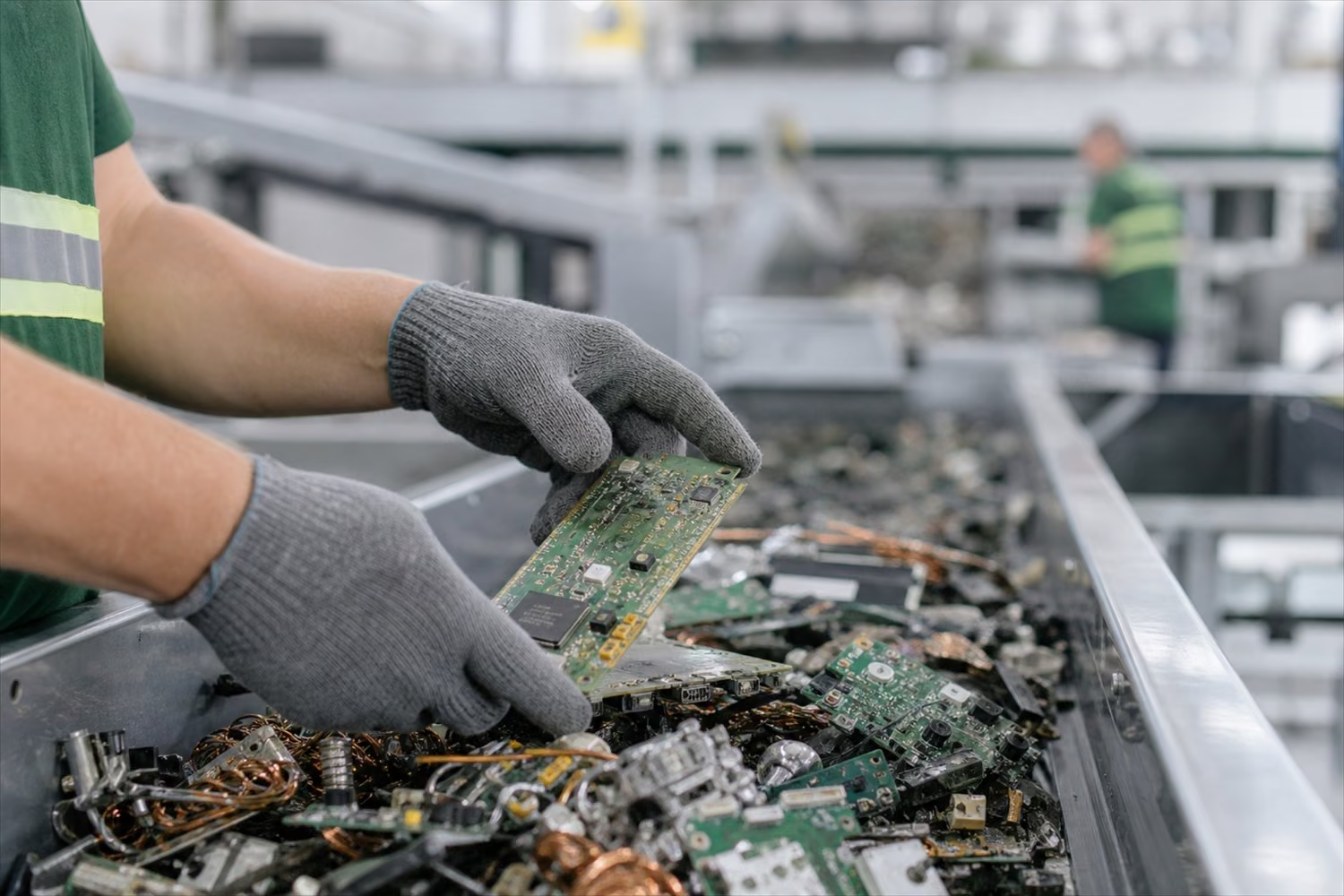
Electronics waste should follow an appropriate treatment route. A customer take-back or component-reuse programme requires a defined arrangement; it should not be assumed to be included in Techbit's manufacturing service.
4. Environmental awareness
Training and clear procedures can help teams manage waste and resources appropriately. Any formal customer or community campaign should be described only when its scope is confirmed.
5. Environmental management systems
ISO 14001 provides a framework for identifying environmental aspects, managing obligations and improving performance. It is distinct from quality management under ISO 9001. This article does not claim that Techbit currently holds ISO 14001 certification.
Conclusion
Electronics manufacturers have a role in addressing environmental challenges. Ecodesign, efficient processes, appropriate energy choices and circular approaches can contribute. Progress requires cooperation across businesses, institutions and consumers, together with clear measures of actual performance.
Many organisations are working to improve manufacturing sustainability. Customers can support this by asking for evidence, considering repair and product lifetime, and choosing suppliers whose specific practices meet their priorities.