


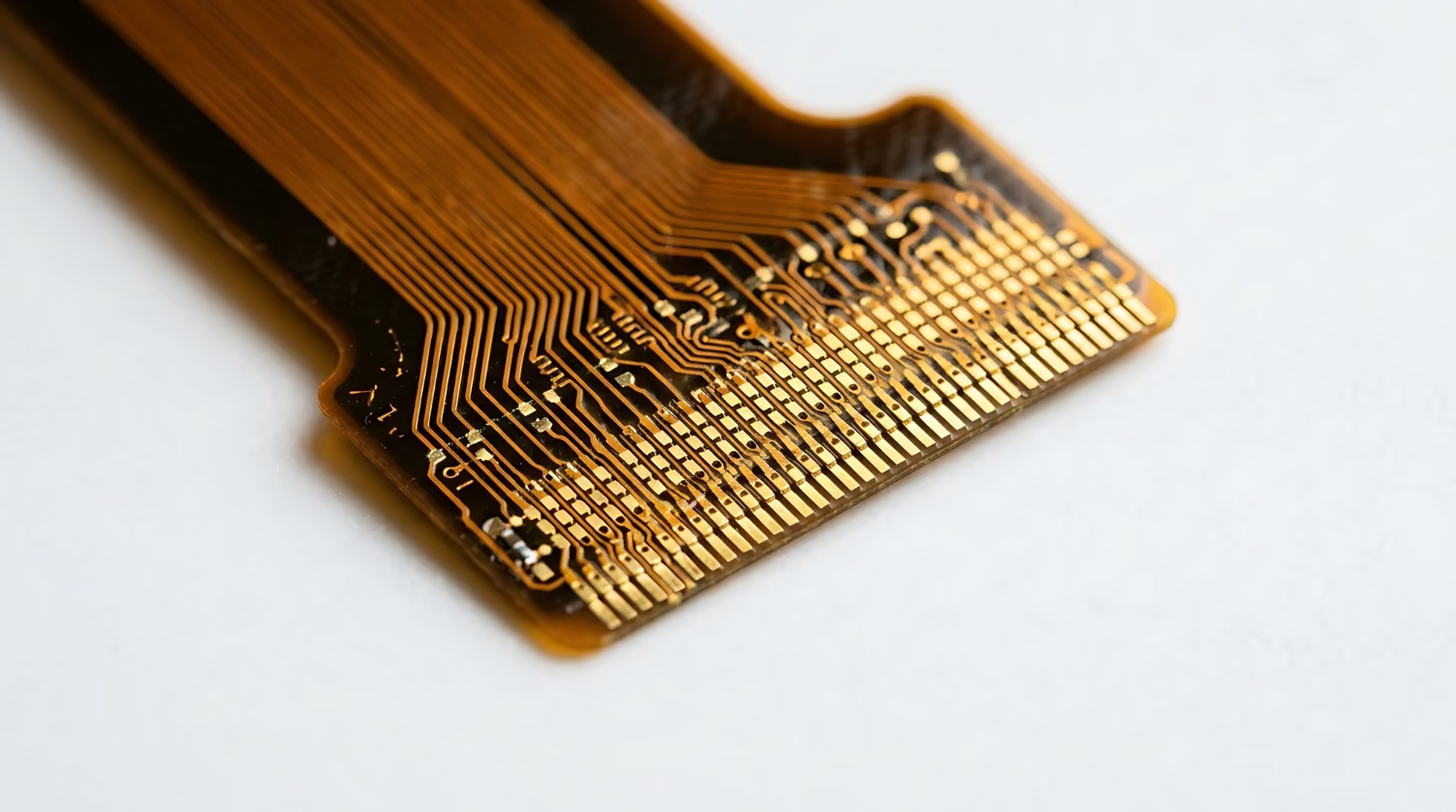
Flexible printed circuit boards, or flex PCBs, are an alternative to rigid boards. Instead of a rigid substrate such as FR-4, they commonly use flexible materials such as polyimide or polyester. This lets a suitably designed circuit fit the shape of a device or accommodate a specified bend.
How do flexible PCBs differ from rigid boards?
Rigid PCBs commonly use glass-reinforced epoxy material such as FR-4. They can have one, two or multiple conductive layers.Flexible PCBs use thin, flexible substrates, often polyimide. Their bend radius and construction must be designed to avoid damage to the conductors.
A correctly designed flex circuit can manage certain mechanical demands differently from a rigid board. Reducing separate wires and connectors can remove potential failure points, which may improve reliability in a suitable application.
- Rigid PCBs are widely used in computers, consumer products and industrial equipment with many different mechanical requirements.
- Flexible PCBs are useful where space, shape or movement matters, including portable, medical, aerospace and automotive electronics.
Initially, a flex PCB may cost more because of its materials and fabrication requirements. In some applications, the total system cost can improve through fewer interconnections, simpler integration or lower service requirements. Where suitable, a flex circuit may replace some cables or connectors and reduce assembly work.
Why consider flexible PCBs?
Flex PCBs offer design options for manufacturers seeking compact and reliable products. Their value comes from matching the construction to the mechanical, electrical and environmental requirements, rather than assuming they are always more durable.
Device life and service costs
A reason to consider a flexible circuit is its potential contribution to reliability and maintenance costs. This depends on how the circuit is designed and used.
- Managing mechanical stress
Wires and connectors can be affected by vibration, mechanical stress or temperature cycling. Flex circuits can reduce some of these connection points by carrying conductors on a flexible substrate. However, excessive or repeated bending outside the design limits can also cause failures. - Performance in demanding conditions
Automotive, aerospace and medical applications may involve mechanical loads, moisture or temperature extremes. A suitable flex construction can address particular packaging and movement requirements, but environmental resistance must be assessed for the selected materials, stack-up and protection. - Fewer separate soldered connections
Connections between boards and wires are potential failure points. Where flex circuits replace separate wired interconnections, they may reduce the number of joints exposed to movement or fatigue.
Production efficiency and material use
Flexible PCBs can also simplify parts of the assembly process.
- Reducing separate parts and assembly work
A device built from several rigid boards may need additional wires, connectors or ribbon cables. A flex or rigid-flex design can replace some of these parts, potentially simplifying integration. - Fewer assembly stages
Reducing manual wire assembly and soldering can reduce opportunities for assembly errors and improve repeatability when the flex solution is properly designed and qualified. - Space and weight savings
Flexible circuits can support compact packaging by fitting within constrained shapes and spaces. Products may become smaller, lighter or easier to package, which is useful in wearable devices, portable electronics and IoT products. - Manufacturing waste
With appropriate design and fewer separate interconnections, a flex solution may reduce some assembly materials. Fabrication waste and overall yield still need to be included when evaluating material savings.
Environmental and lifecycle considerations
When assessing environmental performance, flex PCBs may offer benefits in some designs, but these need to be evaluated rather than assumed.
- Raw-material use
Replacing a rigid-board and cable assembly may change the amount of substrate, copper and solder required. A flex solution can reduce some materials, while introducing others. The effect on the product's footprint depends on the complete design. - Energy use in production
If a flex solution requires fewer assembly operations, it may reduce energy consumption in those stages. The overall environmental effect also depends on board fabrication, yield and the product's service life. - Recycling and disassembly
Removing separate cables and connectors changes the disassembly process. A flex design is not automatically easier to recycle; recycling depends on the materials and available treatment process as well as the ability to separate the assembly from the rest of the product. - The circular economy
Businesses considering flex PCBs should assess material efficiency, durability and repairability together. These factors help determine whether a design supports waste reduction and a longer useful product life.
Are flexible PCBs the future of durable electronics?
Flexible circuits are an established part of electronics design. They provide useful options for compact packaging and interconnection in applications from consumer products to automotive, aerospace and medical devices. Their reliability depends on construction, bending conditions, assembly and the operating environment.
Companies seeking more durable or compact electronics should evaluate whether a flex or rigid-flex construction suits their application. Potential benefits include fewer interconnections, space savings and simpler integration, while costs, material limits and qualification requirements must also be considered.
Flexible PCBs can create new design options and may improve reliability in the right application. Compare them with rigid boards against the actual requirements rather than treating flexibility alone as a guarantee of longer life.