


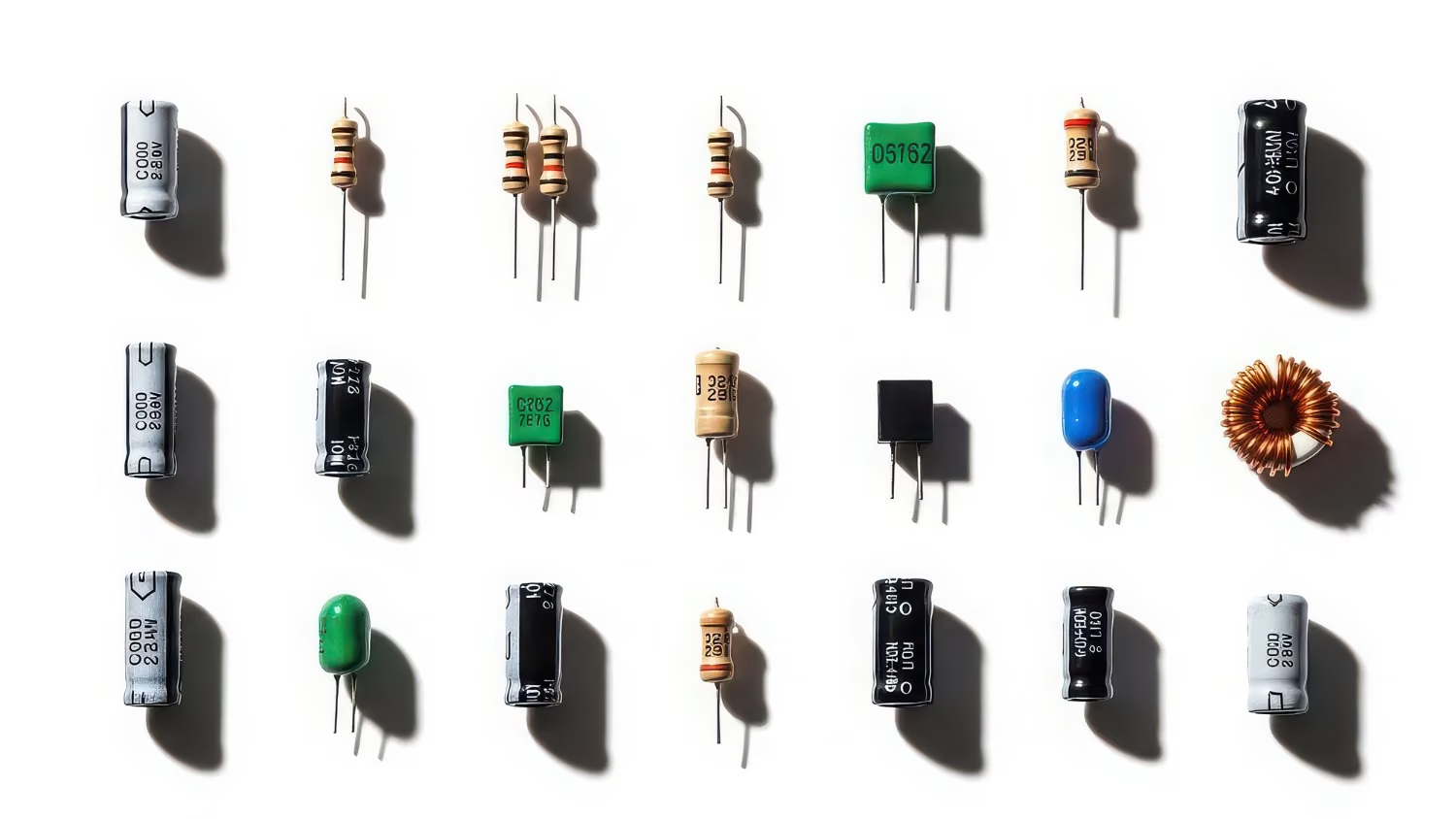
Developing an electronic product requires technical knowledge and a clear understanding of the application and its industry requirements.Whatever your project involves, its electronic components need to be selected carefully.Each component and subsystem must be chosen and integrated to meet the intended functionality, reliability and safety requirements. A considered approach can reduce avoidable delays, costs and design risks.
How are electronic components classified?
Components are commonly grouped into passive, active and electromechanical categories. Each has different properties and applications. The following sections introduce passive and semiconductor components; electromechanical parts include switches, connectors and relays.
Passive components
Passive components do not provide power gain. They are used to limit, filter or store electrical energy and establish the required impedance in a circuit. Common examples include:
- Resistors : used to limit current and dissipate energy. They appear in circuits ranging from simple lighting systems to microprocessor-based devices.
- Capacitors : store electrical charge and energy and respond to changing voltage. They are used in filters, resonant circuits and power supplies.
- Inductors : store energy in a magnetic field. Applications include converters, filters and resonant circuits.
Active and semiconductor components
Active devices can control current and, in suitable circuits, provide signal amplification. Their operation depends on appropriate bias and power conditions. Common semiconductor components include:
- Transistors: used as switches or amplifiers in digital and analogue electronics, from audio amplifiers to processor circuits.
- Integrated circuits (ICs): combine electronic functions in one package. Their complexity varies from simple devices such as the NE555 timer to microcontrollers and processors containing many transistors.
- Diodes: conduct preferentially in one direction. They are used in rectification and protection, while light-emitting diodes (LEDs) provide indication or illumination. Ordinary diodes do not provide power gain.
How should you prepare a project?
An industrial electronics project needs to address technical and economic requirements as well as the intended product idea. From concept to implementation, component selection matters at several stages.
- Start by understanding the project's needs and expectations. Define the required functions and constraints, such as size, power consumption and cost, as well as the operating environment. Identify the standards and acceptance requirements relevant to the application.
- Next, develop the circuit schematic and PCB design while selecting suitable components.
- After designing the circuit, build a prototype. This provides an opportunity to check the device's behaviour against the intended requirements.
- Once the prototype has been tested and any necessary revisions completed, prepare for production. Select a manufacturing partner able to meet the project's quality, process and volume requirements.
Optimising component selection
Careful component selection can improve functionality and reliability while reducing manufacturing costs and operating costs. The following criteria help structure the decision:
- Technical specifications and operating parameters: choose components with suitable electrical and mechanical ratings, including voltage, current, tolerance, dimensions and operating temperature.
- Availability and cost: check supply availability and lead times to reduce the risk of production delays. Assess component prices within the total project cost.
- Standards and application requirements: verify relevant requirements for the component and its intended use, particularly in industrial, automotive and medical applications.
- Necessity and function: assess whether a component is needed and how it contributes to the device's functions.
- Operating-environment resistance: select parts suitable for the application's temperature, humidity, shock and other environmental conditions.
Component selection requires a balance between performance, cost, availability and application requirements. Applying these criteria helps designers reduce risk and improve the likelihood of a successful project.
Discuss your project with our team:PCB manufacturability consultation